Biology
 Chemistry
 Computer
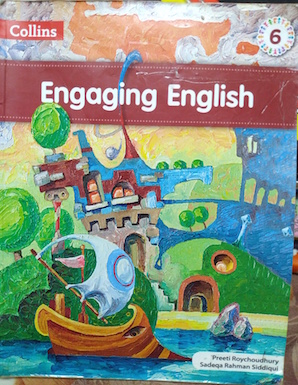
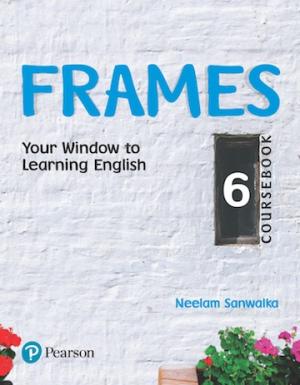
 English
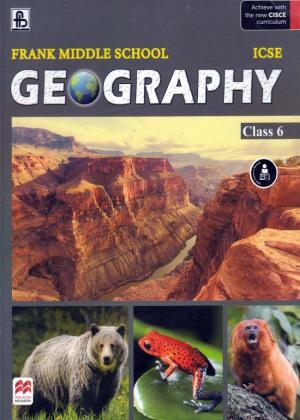
 Geography
 Hindi
Hindi
 History & Civics
 Physics
 Science
Displaying 5 out
of 25
questions & answers.
Q1.
Choose the correct answer.
- The smallest particle which makes up matter is a/an
- atom
- molecule
- element
- particle
- The process by which a solid changes into a liquid is called
- freezing
- melting
- condensation
- liquefaction
- There are large intermolecular spaces in
- solid
- liquid
- gases
- all of these
- Intermolecular forces of attraction is is maximum in
- solids
- liquids
- gases
- all of these
- An example of a sublimable substance is
- water
- plastic
- iodine
- glass
- The SI unit of mass is
- gram
- kilogram
- newton
- all of these
- The state of matter that cannot be compressed easily is
- solid
- liquid
- gas
- liquid and gas
- The spontaneous mixing of the particles of two or more substances is called
- compressibility
- diffusion
- attraction
- repulsion
- the increase in size of a substance on heating is called
- contradiction
- attraction
- expansion
- diffusion
- A chemical change is the change in
- state of matter
- size of matter
- contraction
- composition
S A
M P L E
S
A M P L E
www.bigslate.com
Answer:
S A M P L E
- (a) atom
- (b) melting
- (c) gases
- (a) solids
- (c) iodine
- (b) kilogram
- (a) solid
- (b) diffusion
- (c) expansion
- (d) composition
Q2.
Fill in the blanks.
- The state of matter with definite shape and definite volume is called the ________________ state.
- The state of matter that has maximum compressibility is the ________________ state.
- Liquids and ________________ can flow.
- Boiling points of water is ________________.
- Intermolecular force of attraction is least in the ________________ state.
- Air has ________________ and occupies ________________.
- The volume of any substance ________________ when cooled.
- Sugar changes its ________________ to become caramel which is a substance.
S A
M P L E
S
A M P L E
www.bigslate.com
Answer:
S A M P L E
- solid
- gaseous
- gases
- 100°C
- gaseous
- mass, space
- decreases
- form
Q3.
Write True (T) or False (F) against the following statements:
- Gas molecules can move freely in all directions.
- Molecules are very closely packed in liquids.
- The process of conversation of a solid into a liquid is called boiling.
- All matter is made up of tiny, invisible moving particles called atoms.
- A liquid has definite volume.
S A
M P L E
S
A M P L E
www.bigslate.com
Answer:
S A M P L E
- True
- False: Molecules in liquids are loosely packed, allowing them to flow.
- False: The process of conversion of a solid into a liquid is called melting.
- True
- True
Q4.
Match the following:
| Column A | Column B |
| 1. Atom | a. Chemical change |
| 2. Solid | b. gaps between the molecules |
| 3. Vapourisation | c. Change of state from liquid to gas |
| 4. Gas | d. Tiny particles of matter |
| 5. Intermolecular space | e. Have definite shape and volume |
| 6. New substance | f. Have least intermolecular force of attraction |
S A
M P L E
S
A M P L E
www.bigslate.com
Answer:
S A M P L E
- (d) Tiny particles of matter
- (e) Have definite shape and volume
- (c) Change of state from liquid to gas
- (f) Have least intermolecular force of attraction
- (b) Gaps between the molecules
- (a) Chemical change
Q5.
What do you understand by matter? Name the three states of matter.
S A
M P L E
S
A M P L E
www.bigslate.com
Answer:
S A M P L E
answer not shown